Hackathon field report
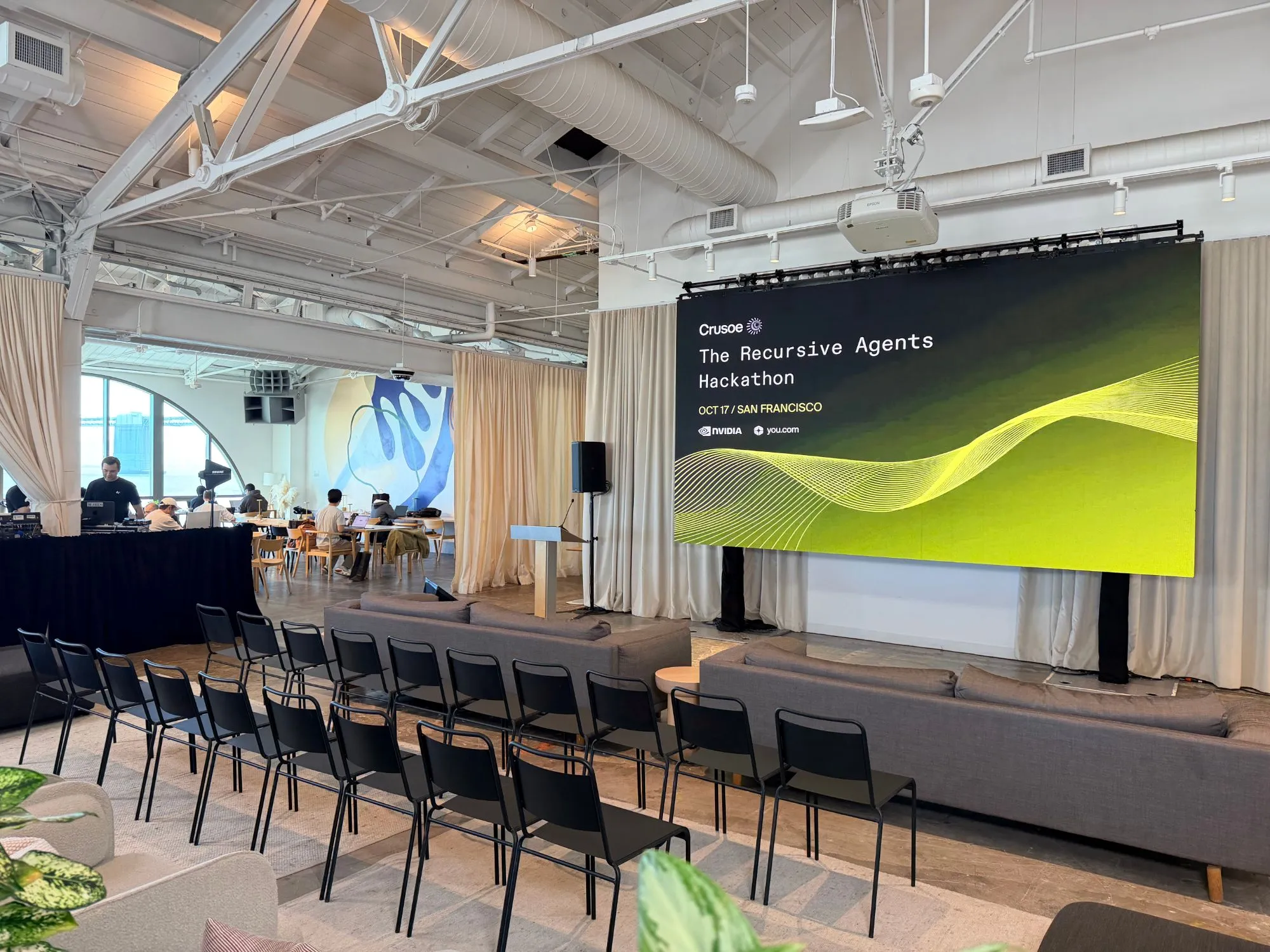
Crusoe x Cerebral Valley Recursive Agents Hackathon
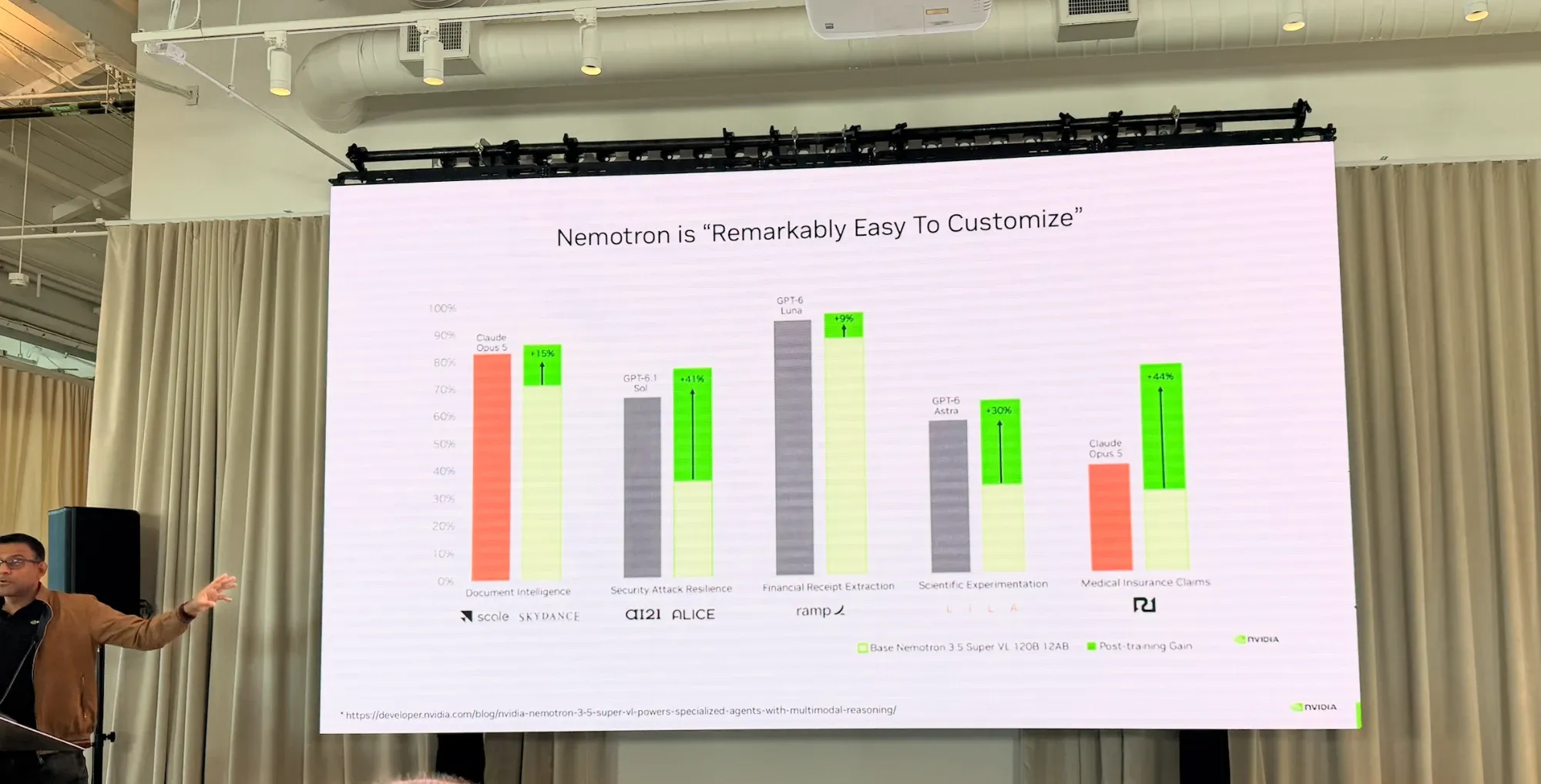
sponsor prizeWon NVIDIA Best Use of Nemotron with Factory N+1: Nemotron agents redesign a fulfillment floor and a frozen simulator decides what ships. 82% lower penalty, 0 damaged, about 4 cents.
Event photos
Prototype
I built Factory N+1 at the Recursive Agents Hackathon, hosted by Crusoe and Cerebral Valley with NVIDIA and You.com at SHACK15 in San Francisco on October 17, 2026. It won NVIDIA Best Use of Nemotron. The prize was an NVIDIA RTX 5090.
The problem I chose
A factory floor gets drawn once and built. After that, moving anything is slow, risky and expensive.
So Factory N+1 redesigns the floor in simulation. Nemotron agents propose each layout. A frozen simulator runs 100 packages through it. A change ships only if it beats the current floor by at least 1% on 9 validation days and no goal check gets worse.
What shipped during the day
- Nemotron 3.5 Super VL designers proposing layouts through typed tool calls, with Lightning running research on You.com. Every citation had to match a URL the search actually returned.
- A frozen, hash-pinned simulator as the only grader. Agents never score themselves.
- Rev 11: 18,061 to 3,283 average penalty, 82% lower. 100/100 shipped, 0 damaged, 0 mis-sorts on all 15 development days. 54 model calls, $0.042.
- A three.js replay of the original floor and the agents’ floor on the same clock.
- A fine-tuned Nemotron Nano 8B optimizer (LoRA, one epoch, one Crusoe A100). On 20 unseen factories it cut mean penalty 12.64%, against 0.14% for the base model and 4.27% for random legal moves under the same limits.
What the event taught me
- The grader is the product. The model lied once, inventing a simulator run, and the grader caught it.
- Measure the edit, not the story. A designer credited a fix to the wrong change. Scoring each edit alone found the real cause.
- Agents need tools, not just prompts. Three runs failed on misjudged route lengths. A ruler tool fixed it with one move of one station.
- Show the negative result. Shared memory lost all 4 paired tests on new factories. It went on the page instead of getting tuned away.
What I would change next
One track, one claim, one number from a sealed exam. The 82% came from validation days the gate selected on; the locked 20-day test split stayed closed. Next time the headline comes from days the agents never saw, against classic layout optimizers at the same simulator budget.
Factory N+1 also sparked the next thing I am building: simulating real manufacturing floors so hardware teams can run their prototype builds before they build.